Browse our collection of organic coffee beans sourced from sustainable farms
What Says
Premium Coffee Beans
Before coffee was a drink, it was a place. Before it was traded, it was discovered.
“Espresso isn’t hard. It’s exact. The difference between
No products in the cart.
Return To ShopNo products in the cart.
Return To ShopWhat Says
“Espresso isn’t hard. It’s exact. The difference between
Browse our collection of organic coffee beans sourced from sustainable farms
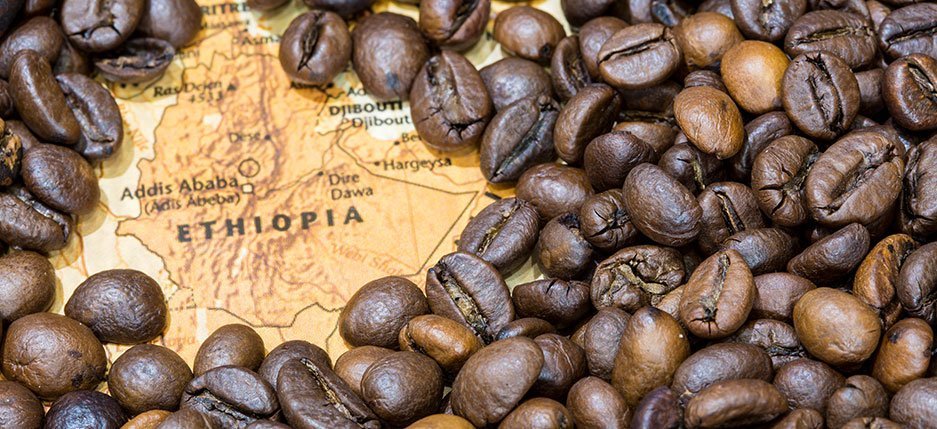
The story of coffee beans begins in Ethiopia, where wild coffee plants grew naturally in the highlands long before cultivation existed. According to legend, a goat herder named Kaldi noticed his animals becoming unusually energetic after eating red cherries from a certain shrub. While the tale is likely apocryphal, Ethiopia’s role as coffee’s genetic homeland is undisputed.
What matters more than the legend is the reality: Ethiopia still hosts the greatest diversity of coffee genetics on Earth. Many of today’s flavor profiles — floral, citrus, tea-like — trace directly back to these wild Arabica populations. Coffee wasn’t engineered here. It was found.
Coffee beans vary widely in origin, roast, and processing, shaping everything from aroma to body. To explore the full universe of coffee culture, brewing methods, history, and origins, visit our complete coffee guide.
Coffee as a cultivated crop emerged across the Red Sea, in Yemen, around the 15th century. This is where coffee shifted from a wild plant to an agricultural product. Yemeni farmers began deliberately growing coffee, drying the beans, and roasting them for consumption.
Coffee quickly became embedded in Sufi religious practice, used to maintain focus during long nights of prayer. From there, coffeehouses spread across the Islamic world, serving as places of conversation, music, politics, and learning. Coffee was no longer just a stimulant — it had become a social force.
For centuries, Yemen controlled coffee trade tightly. Beans were often boiled or treated before export to prevent germination, ensuring cultivation remained local. This monopoly would not last.
As demand grew, coffee inevitably escaped its original borders. Through trade routes and colonial expansion, coffee plants were smuggled and transplanted across Asia, then to the Americas. European powers established large-scale plantations in tropical regions where climate and altitude allowed coffee to thrive.
Each new location reshaped coffee’s identity. Soil composition, elevation, rainfall, and local farming practices created distinct regional profiles. Coffee stopped being singular. It became plural.
By the 18th and 19th centuries, coffee had transformed into a global agricultural commodity, deeply tied to economics, labor systems, and international trade. Its spread mirrors the history of globalization itself — complex, uneven, and deeply human.
Understanding where coffee beans come from isn’t just historical trivia. Origin defines genetics. Genetics influence flavor. Flavor shapes culture. The beans you brew today carry the imprint of centuries of movement, adaptation, and human choice.
Coffee culture didn’t emerge overnight.
It migrated, evolved, and diversified — one bean at a time.
Long before coffee is roasted or brewed, its flavor is already taking shape in the ground.
Coffee does not grow everywhere. It requires a very specific combination of temperature, rainfall, altitude, and patience. Most coffee-producing regions sit within what’s often called the coffee belt, a band around the equator where conditions are stable enough for slow, controlled growth.
Altitude plays a crucial role. At higher elevations, coffee cherries mature more slowly. This extended growth allows sugars and organic acids to develop more fully inside the bean. The result is greater complexity, brighter acidity, and more defined aromas. Lower-altitude coffees tend to grow faster, producing heavier body and simpler, rounder flavor profiles.
Coffee plants are sensitive. Too much heat, irregular rainfall, or sudden climate shifts can dramatically affect quality. This is why coffee farming is as much about adaptation as tradition.
Just like wine, coffee expresses terroir — the combined influence of soil, climate, elevation, and local farming practices. Volcanic soils rich in minerals often produce coffees with clarity and vibrancy. Clay-heavy soils may emphasize body and depth. Even within the same country, two regions can produce radically different coffees.
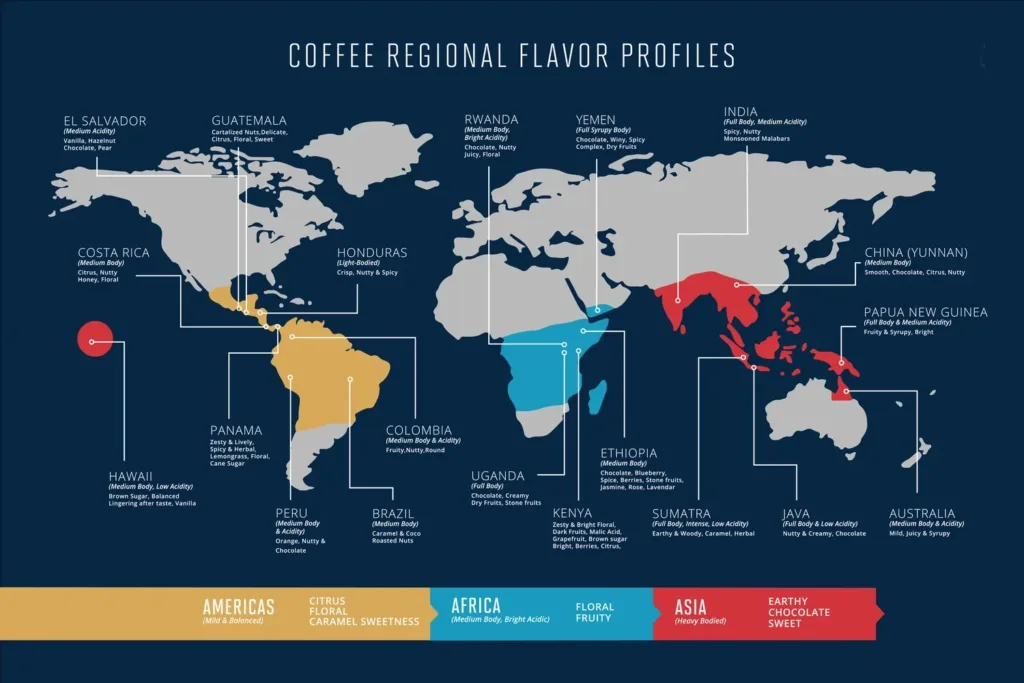
Terroir explains why Ethiopian coffees often lean floral and citrus-driven, while coffees from Brazil are known for chocolate, nuts, and low acidity. These differences aren’t accidents. They are environmental signatures.
Coffee doesn’t just grow in a place.
It tastes like that place.
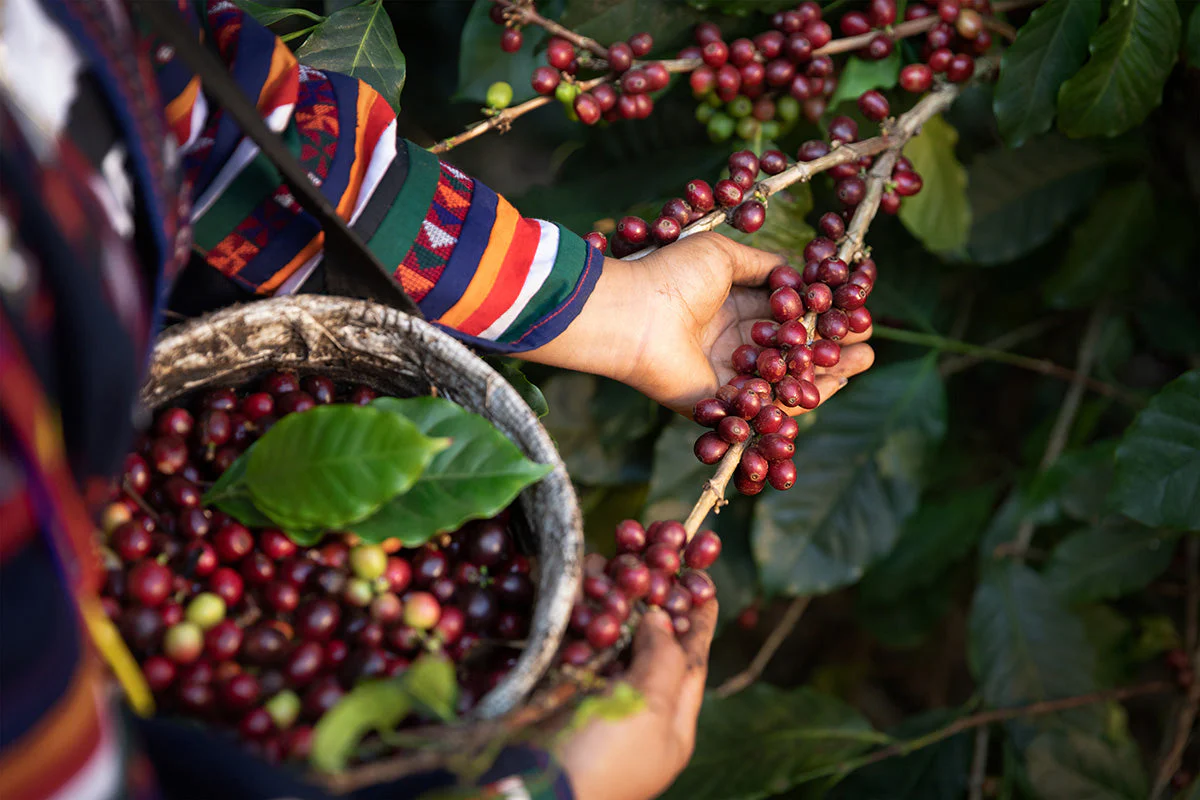
Once coffee cherries ripen, how they’re harvested becomes critical. The highest-quality coffees are usually hand-picked, allowing farmers to select only ripe cherries. This selective harvesting preserves sweetness and balance.
Mechanical harvesting is faster and cheaper but less precise. Unripe and overripe cherries are collected together, often leading to harsher flavors and inconsistency. For commodity coffee, this trade-off is accepted. For specialty coffee, it’s a compromise.
Harvest timing also matters. Pick too early, and the bean lacks sweetness. Pick too late, and fermentation risks increase. Coffee quality lives in these margins.
From planting to first harvest, a coffee plant can take three to five years to produce usable cherries. This long cycle is one reason coffee quality varies so widely and why great coffee cannot be rushed. Every harvest reflects years of decisions made long before roasting ever begins.
When you drink coffee, you’re tasting agriculture, not just brewing.
What processing really means
Once coffee cherries are harvested, they don’t become “coffee beans” immediately. Inside each cherry are seeds surrounded by layers of pulp, mucilage, and skin. Processing is the set of decisions that removes those layers and stabilizes the bean for storage and export.
This stage is critical. Processing doesn’t just prepare coffee for roasting — it actively shapes sweetness, acidity, body, and aroma. Two coffees grown on the same farm, harvested on the same day, can taste completely different depending on how they’re processed.
Processing is where agriculture meets intention.
In the washed (or wet) process, coffee cherries are depulped soon after harvest, and the remaining mucilage is removed through controlled fermentation and washing. The beans are then dried without most of the fruit still attached.
This method tends to highlight clarity, acidity, and structure. Flavors feel cleaner and more transparent, allowing origin and terroir to stand out. Washed coffees often show citrus, floral, and tea-like characteristics, especially when grown at high altitude.
Washed processing is common in regions where water is available and consistency is valued. It doesn’t add flavor — it reveals it.
In the natural (or dry) process, whole coffee cherries are dried intact, with the fruit still surrounding the bean. As the cherry dries, sugars and compounds from the fruit migrate into the seed.
This method often produces heavier body, pronounced sweetness, and fruit-forward flavors. Notes of berries, tropical fruit, wine, or fermented sweetness are common. When done well, natural coffees can be expressive and complex. When done poorly, they can taste overly funky or unstable.
Natural processing requires careful control and patience. Drying is slower, riskier, and more climate-dependent — but the flavor payoff can be dramatic.
The honey process sits between washed and natural methods. The cherry skin is removed, but some or all of the sticky mucilage remains on the bean during drying. The amount left on determines how much sweetness and body develop.
Honey-processed coffees often balance clean acidity with round sweetness, producing caramel, honey, or stone fruit notes. This method allows producers to shape flavor deliberately while maintaining structure.
It’s less about tradition and more about control.
No matter the processing method, drying is the final and decisive step. Beans must be dried slowly and evenly to reach stable moisture levels. Dry too fast, and the bean cracks internally. Dry too slow, and fermentation defects develop.
Drying can happen on patios, raised beds, or mechanical dryers. Each approach affects airflow, temperature, and uniformity. Well-dried coffee is stable, aromatic, and capable of aging gracefully. Poor drying permanently damages quality — no roast can fix it.
Drying doesn’t add flavor.
It protects it.
Processing influences how coffee expresses sweetness, acidity, and body — sometimes more than roast level. It explains why two coffees from the same origin can taste radically different. It’s also why understanding processing helps you choose beans more intentionally.
When you taste fruitiness, cleanliness, heaviness, or clarity in a cup, you’re tasting decisions made after harvest but before roasting.
This is where coffee stops being just a plant
and starts becoming a product of human choice.
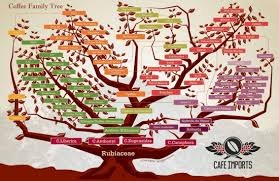
Not all coffee beans are the same. Genetics decide how coffee behaves — and how it tastes.
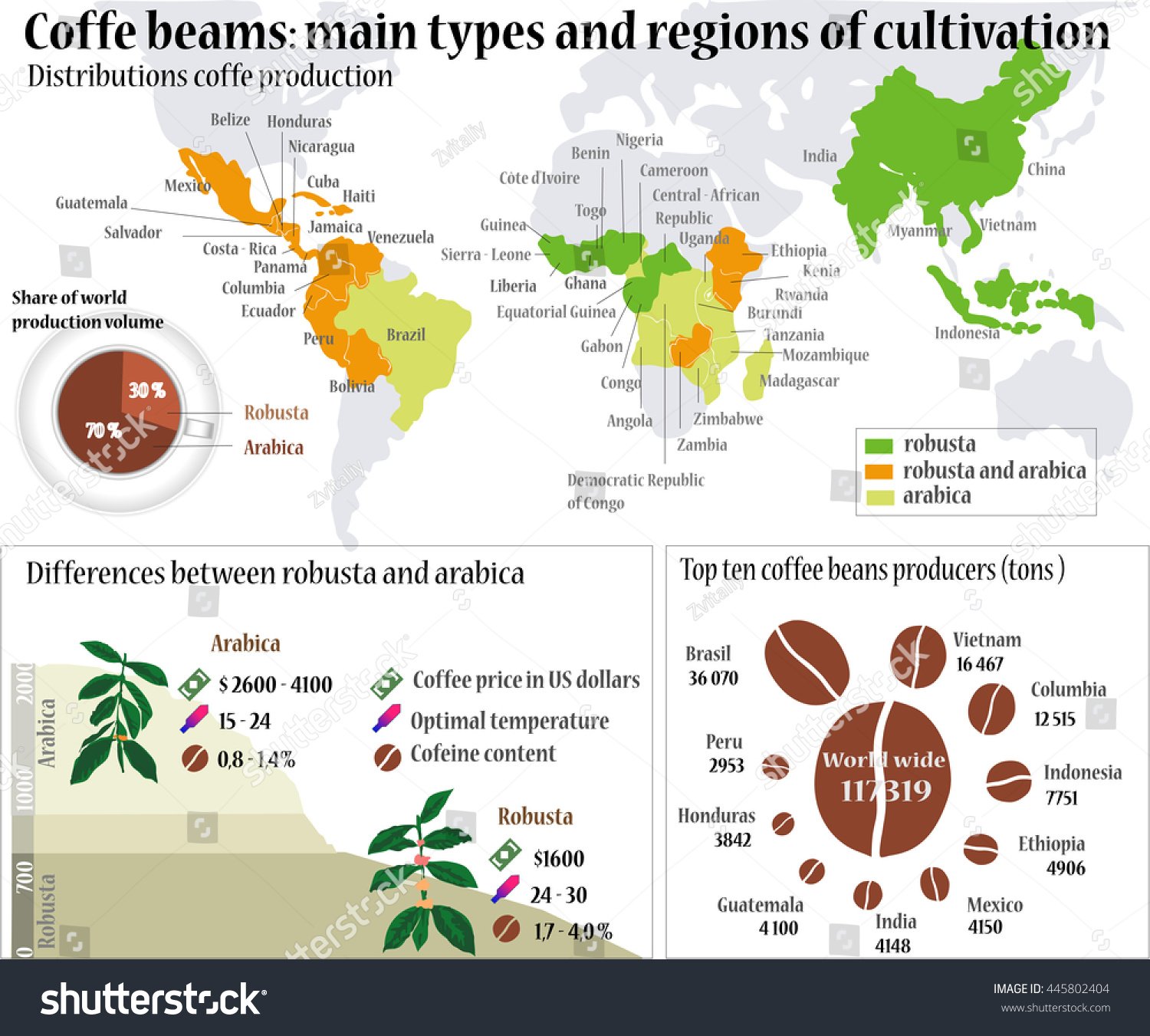
Arabica is the oldest cultivated coffee species and still the most valued for quality. It originated in the Ethiopian highlands, where wild Arabica plants developed complex genetics in isolation. Today, Arabica represents the majority of specialty coffee worldwide.
Arabica beans tend to produce higher acidity, greater aromatic complexity, and more nuanced flavors. Floral notes, citrus, stone fruit, and delicate sweetness are common, especially in high-altitude coffees. The plant is sensitive to climate and disease, which makes it harder to grow but often more expressive in the cup.
Many famous coffee regions are built on Arabica alone: Ethiopia, Colombia, Guatemala, Costa Rica. When people describe coffee as elegant or refined, they are almost always talking about Arabica.
Robusta developed in lower-altitude regions of Central and West Africa, where harsher conditions shaped a tougher plant. As the name suggests, Robusta is more resistant to disease and produces higher yields. It also contains significantly more caffeine than Arabica.
In the cup, Robusta delivers heavier body, lower acidity, and more bitterness. Flavor notes often lean toward dark chocolate, wood, earth, or grain. Aromatics are less pronounced, but crema production is stronger, which is why Robusta is commonly used in traditional Italian espresso blends.
Robusta is not inherently bad coffee. Poor-quality Robusta dominates commodity markets, but well-grown Robusta can add structure, intensity, and depth — especially in espresso.
Beyond Arabica and Robusta, there are lesser-known coffee species that play smaller but meaningful roles. Liberica produces large, irregular beans and thrives in specific climates, particularly in parts of Southeast Asia. Its flavor profile is unusual — often described as smoky, woody, or floral in unexpected ways.
Excelsa, now considered a variety within the Liberica family, brings tartness and fruit-forward characteristics that stand apart from both Arabica and Robusta. These coffees are niche, but they remind us that coffee genetics extend beyond the mainstream.
Coffee flavor begins at the genetic level. Bean structure affects how sugars develop, how acids form, and how the bean reacts to heat during roasting. Genetics influence density, solubility, and aromatic potential — all of which shape extraction later on.
This is why the same roast level applied to different species yields completely different results. Roast and processing can highlight or soften traits, but they cannot override genetics.
Understanding bean families helps explain why certain coffees feel bright, heavy, smooth, or aggressive before you even grind them. It’s the blueprint beneath the flavor.
Coffee doesn’t just grow somewhere. It tastes like where it grows.
Africa is coffee’s genetic and cultural homeland, and it produces some of the most expressive coffees in the world. African coffees are often defined by bright acidity, floral aromatics, and layered fruit notes. These profiles come from high elevations, cool nights, and ancient soils.
Ethiopia, where Arabica originated, offers enormous diversity. Coffees can taste like jasmine, bergamot, citrus, or ripe stone fruit, depending on region and processing. Kenya is known for structured acidity and blackcurrant-like intensity, while Rwanda and Burundi often produce elegant, tea-like coffees with clarity.
African coffees tend to reward attentive brewing. They are vibrant and complex, but unforgiving when under-extracted.
Central American coffees are often described as the most balanced. Countries like Guatemala, Costa Rica, Honduras, and El Salvador produce coffees that combine sweetness, moderate acidity, and clean structure.
Volcanic soils contribute mineral richness, while consistent growing conditions allow sugars to develop evenly. Flavor notes commonly include caramel, chocolate, nuts, and mild fruit. These coffees are approachable and versatile, working well across many brew methods.
For many people, Central American coffee represents the “classic” coffee taste — structured, sweet, and reliable without being dull.
South America, particularly Brazil, is the world’s largest coffee producer. The region is known for coffees with low acidity, heavy body, and comforting flavors. Chocolate, nuts, cocoa, and mild sweetness dominate.
Brazilian coffees often grow at lower altitudes and are processed naturally, contributing to roundness and weight in the cup. These coffees form the backbone of many espresso blends because they provide structure and balance.
Colombia sits slightly apart, offering higher acidity and more complexity while retaining sweetness. Its coffees often bridge the gap between African brightness and Brazilian body.
Asian coffee-producing regions offer some of the most distinctive profiles. Indonesia, including Sumatra and Java, is known for earthy, herbal, spicy, and sometimes smoky flavors. These characteristics come from climate, processing methods, and soil composition.
Many Asian coffees have heavier body and lower acidity, making them well-suited for dark roasts and espresso. Vietnam, the world’s largest Robusta producer, plays a major role in global coffee supply and traditional coffee culture, especially where intensity and strength are valued.
Asia-Pacific coffees often divide opinion — but they are unmistakable. Nothing else tastes like them.
Geography determines altitude, climate, soil, and biodiversity — all of which influence how coffee cherries mature. Slow maturation at high altitude increases complexity. Stable climates promote consistency. Soil composition affects mineral uptake.
Processing and roasting shape the final expression, but geography sets the foundation. You can roast two coffees identically and still taste two different continents in the cup.
Coffee is agricultural truth made drinkable.
Roasting doesn’t add flavor. It reveals, reshapes, and sometimes hides what’s already there.
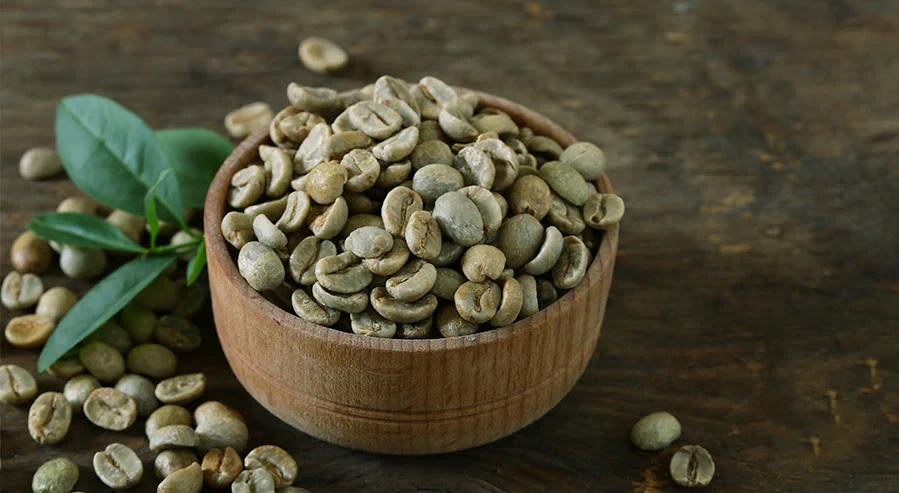
Coffee roasting is a controlled thermal transformation. Green coffee beans are dense, grassy, and chemically inactive in terms of flavor. Roasting activates them. Most coffee around the world is roasted using either drum roasters, where beans rotate inside a heated metal chamber, or air roasters, where beans are suspended and agitated by hot air. The difference isn’t just mechanical — it affects how evenly and quickly heat is applied.
A typical roast lasts between 8 and 15 minutes. During that short window, beans lose moisture, expand, fracture internally, and change color from green to yellow, then brown. But the most important changes are chemical. As temperature rises, Maillard reactions begin — complex reactions between amino acids and sugars that generate hundreds of aromatic compounds. These reactions are responsible for flavors like toast, nuts, bread crust, and caramel.
At the same time, caramelization breaks down sugars, deepening sweetness and body. Organic acids evolve: some degrade, others transform, which reshapes perceived acidity. Volatile aromatic compounds are created — and, if roasting goes too far, destroyed. This is why roasting is not about reaching a specific color, but about managing heat and time together. Too fast, and the bean remains underdeveloped. Too slow, and origin character fades.
Every roast is a negotiation between chemistry and control.
Different coffee cultures have developed distinct roasting philosophies based on taste preferences, brewing methods, and history.
In Northern Europe and Scandinavia, roasting tends to be very light. Beans are often dropped shortly after first crack, preserving acidity and aromatic complexity. These roasts emphasize clarity and origin expression, revealing floral, citrus, and tea-like notes.
In Central Europe and North America, medium roasts dominate. These roasts aim for balance, allowing sugars to caramelize while maintaining structure. Sweetness becomes more prominent, acidity softens, and flavors like caramel, chocolate, and nuts emerge without overpowering the bean’s origin.
In Southern Europe, especially Italy, traditional roasting pushes darker. Beans are taken well beyond first crack, producing lower acidity, heavier body, and bitter-sweet flavors such as dark chocolate, spice, and smoke. These roasts are tightly linked to espresso culture, where intensity and crema are valued over nuance.
In parts of Asia and the Middle East, roasting styles vary widely, shaped by local traditions and brewing methods. Some cultures favor extremely light roasts, others extremely dark ones. In each case, roasting reflects taste, not hierarchy.
Roast level is not a measure of quality.
It is a cultural expression.
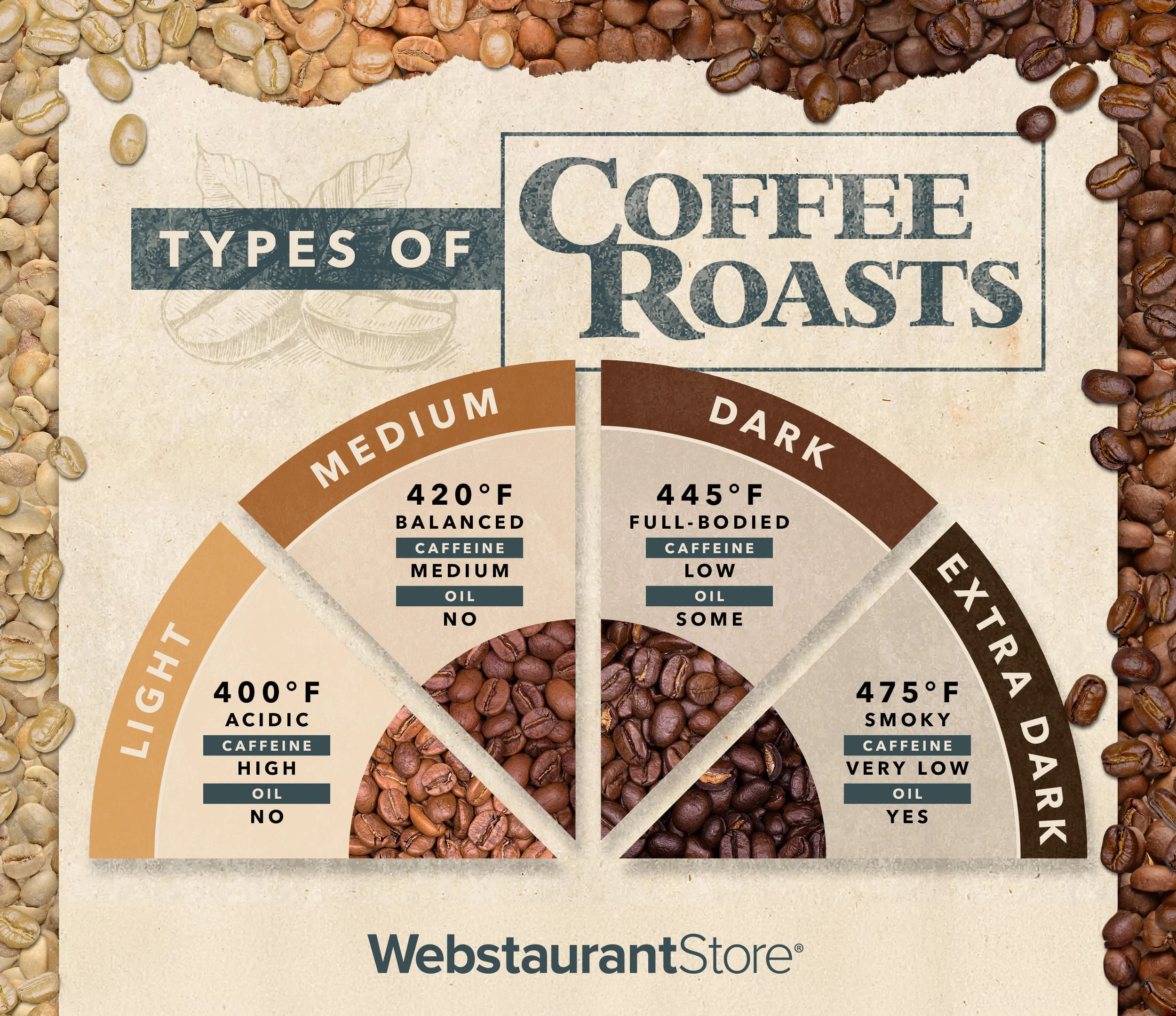
Light roast coffee — often marketed as blonde coffee — is roasted for a shorter time and stopped at lower end temperatures. These beans retain more of their original acids and volatile aromatics, which makes them taste brighter, more acidic, and more aromatic.
Blonde coffees often express citrus, florals, stone fruit, or tea-like qualities. They can feel lighter in body but more complex in aroma. However, they are also harder to extract. Because sugars are less developed, under-extraction quickly leads to sourness. This is why blonde coffee is sometimes misunderstood as weak or sharp when brewed improperly.
Blonde does not mean under-roasted.
It means intentionally restrained.
Medium roasts sit at the intersection of acidity and sweetness. At this stage, Maillard reactions and caramelization are well developed, producing roundness and balance. Acidity becomes gentler, sweetness more pronounced, and body fuller.
Flavors often include caramel, milk chocolate, nuts, and mild fruit. Origin character remains visible, but less sharp. This balance makes medium roasts the most versatile choice across brewing methods and the most approachable for many drinkers.
Medium roasting is not a compromise.
It’s a deliberate equilibrium.
Dark roasts push coffee beyond balance into dominance. Acidity drops sharply, bitterness increases, and roast-driven flavors take center stage. Smoke, spice, dark cocoa, and toasted grain replace delicate aromatics. Body becomes heavier, texture thicker.
Dark roasting is often used to create consistency, especially in large-scale production or traditional espresso blends. When done carefully, it can be comforting and powerful. When pushed too far, it overwhelms nuance and creates harshness.
Dark roast doesn’t remove flaws.
It hides them — briefly.
Roast level determines which compounds are emphasized in the cup. Light roasts highlight acidity and aromatics. Medium roasts emphasize sweetness and balance. Dark roasts emphasize bitterness and body.
None of these profiles is inherently better. The “right” roast depends on the bean’s origin, its variety, the processing method, and how the coffee will be brewed. Roasting does not create identity — it interprets it.
Once you understand roasting, choosing coffee becomes intentional rather than habitual.